
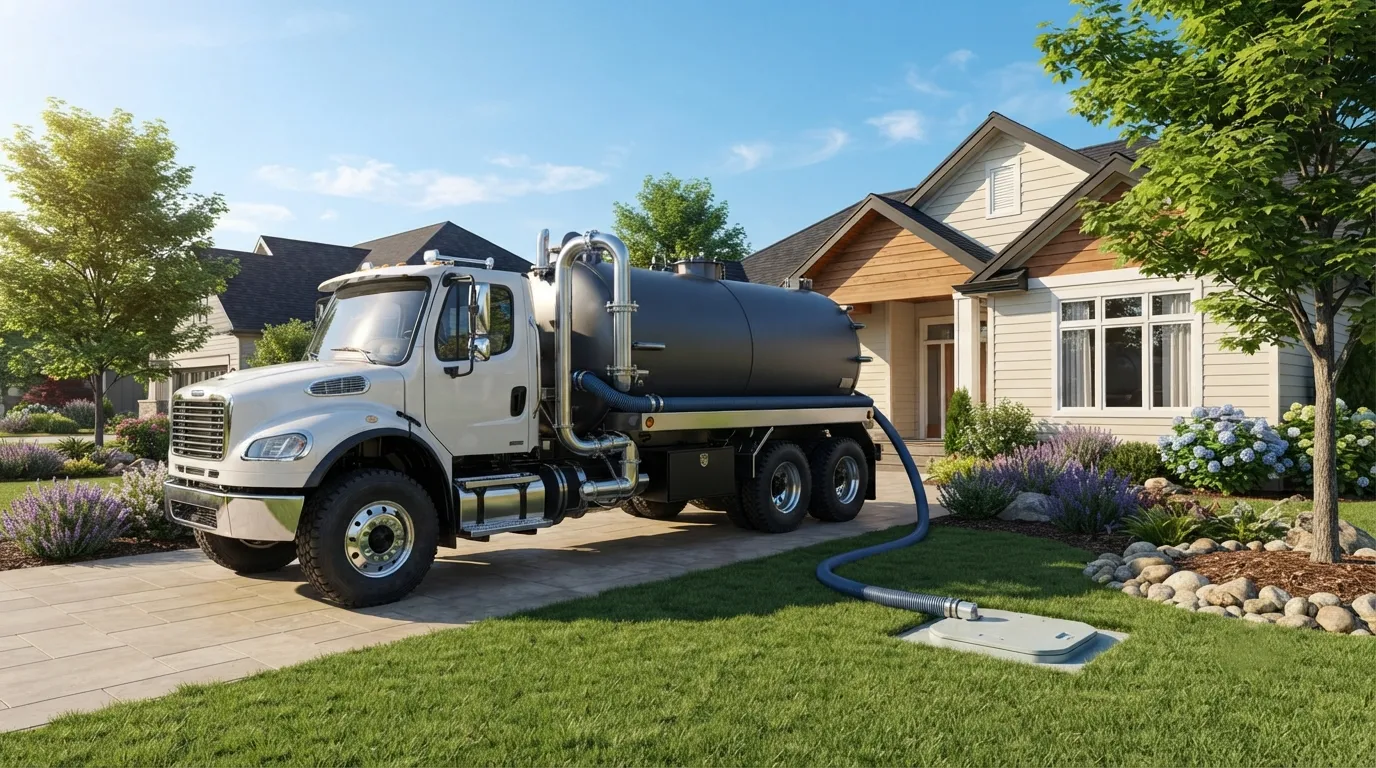
How do porta potties work?
The design is simple on purpose. A construction worker walks up, opens the door, and drops onto a seat mounted over a holding tank built into the base of the unit. Nothing flushes. Waste falls straight into the tank, where a chemical treatment (the same kind of blue liquid people search for as "portable toilet chemicals near me") controls smell and starts breaking things down. A standard unit runs about 44 by 48 inches on the ground and stands close to 92 inches tall, so it fits into a job site corner without eating much space. Vents near the roof pull odor up and out instead of trapping it inside. When the tank fills, Brockton Porta Pros pumps it out and re-doses the chemical, following the same how often are porta potties cleaned schedule set for the account. For most job sites, that means a weekly service call is the working baseline, in line with the ANSI/PSAI Z4.3 portable sanitation standard of one visit per week per unit for typical use. If you're planning quantities for a crew, the how many porta potties do I need guide walks through the math OSHA expects.
How do flushable porta potties work?
A deluxe flushable porta potty uses a small onboard freshwater tank and a foot pump or battery pump to push a rinse of water through the bowl after each use, instead of relying only on chemical treatment sitting in the tank below. The waste still goes into a sealed holding tank, same as a standard unit, but the flush cuts down on residue and smell between services. These units cost more to rent than a standard porta potty because of the extra tank and pump hardware. For weddings, corporate events, or any site in Brockton where guests expect something closer to a real bathroom, this is usually the upgrade people ask for. Pair one with a portable sink rental or a standalone handwashing station rental and you cover both flushing and washing without pulling water from a building. If the event needs full accessibility, look at the ADA accessible porta potty option instead, which is built around a wider door and turning space rather than the flush mechanism itself.
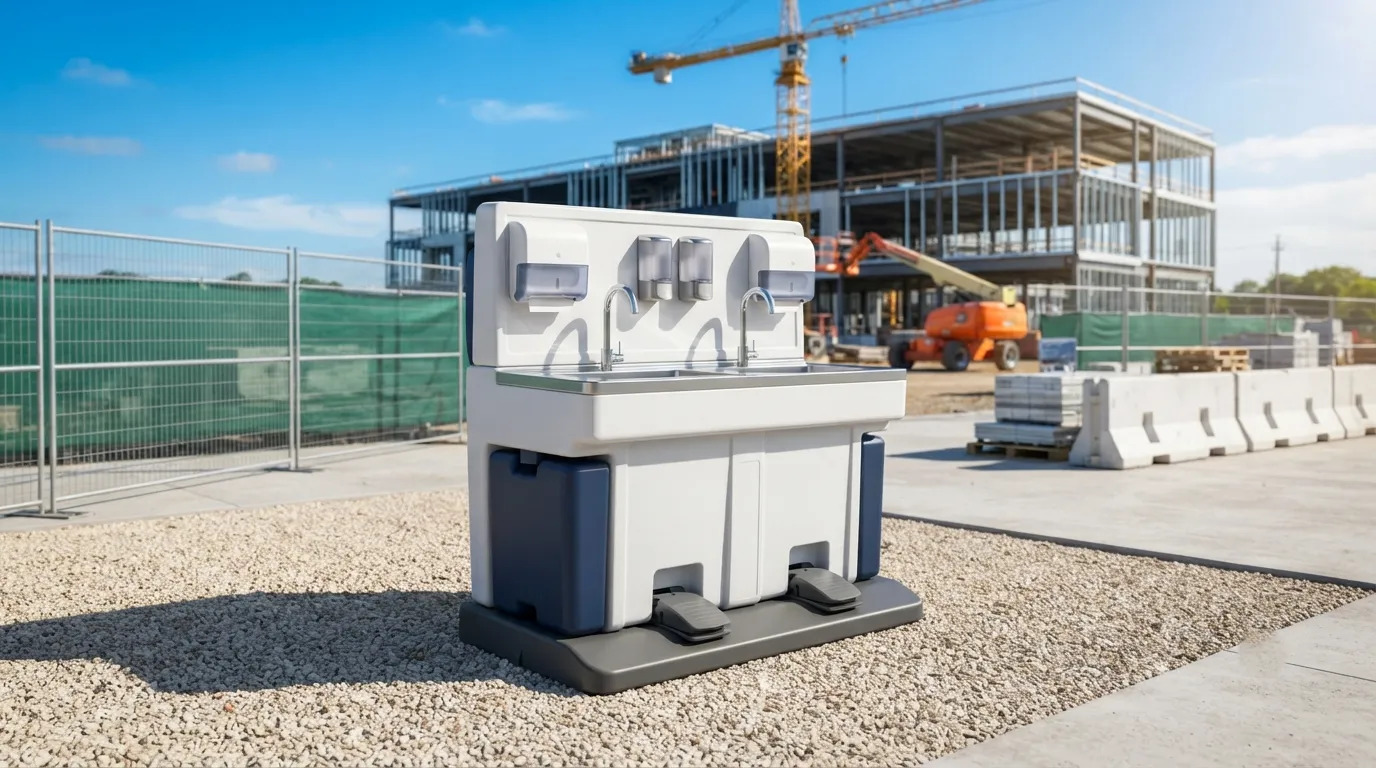
How does a portable sink work?
A portable sink carries its own fresh water in an internal tank, usually paired with a foot pump or a small 12-volt pump that draws water up to the faucet. Wastewater drains down into a separate holding tank underneath, sealed off from the fresh side, so nothing mixes. Soap comes from a built-in dispenser and paper towels sit in a small compartment on top or side. That setup matters because 29 CFR 1910.141(d)(2) requires washing facilities to have soap and towels or a hand-drying device. Hand sanitizer alone doesn't satisfy that. On job sites where crews are applying paints, coatings, herbicides or insecticides, OSHA 1926.51(f)(1) specifically requires washing facilities for that contaminant exposure, not just a sanitizer station. A hand sanitizer station rental works fine for general foot traffic at an event, but if your Brockton site involves those chemicals, you need an actual sink. Full detail on what triggers which requirement is in the handwashing station requirements page.
How do camping porta potties work?
Camping and event units work the same basic way as job site units: sealed tank, chemical treatment, no plumbing hookup needed. The difference is mostly about placement and service frequency rather than mechanics. A weekend campout or a single-day festival in Brockton might only need one service cycle, so renters often book the weekend rate instead of a weekly contract. Placement still matters. ADA Standards section 302.1 requires the ground surface under and around the unit to be stable, firm and slip resistant, which rules out soft grass or loose gravel for accessible units. If you're clustering multiple units for a festival restroom rental or county fair restrooms job, ADA Standards section 213.2 requires at least 5 percent of clustered single-user units to be accessible, with a minimum of one. The porta potty placement guide covers ground conditions and clearance in more detail than fits here.
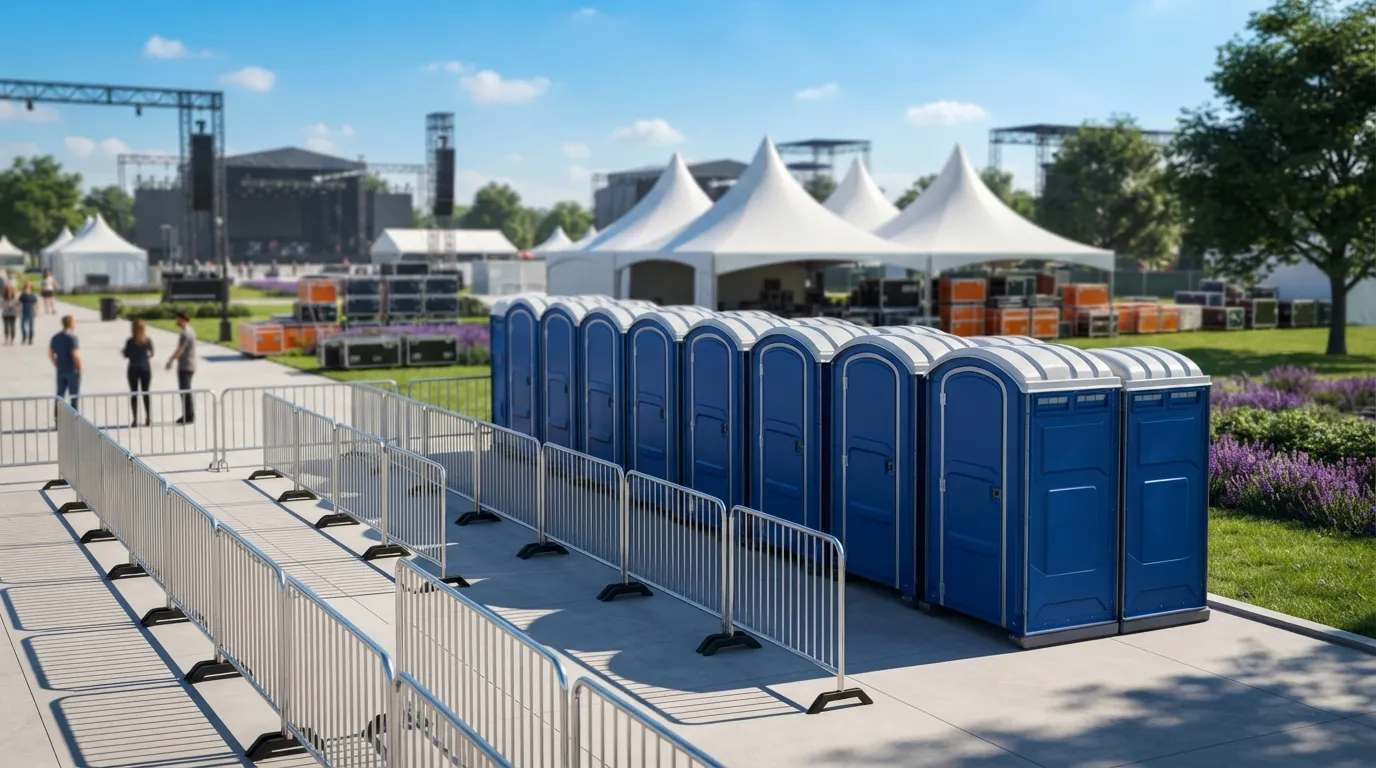
What does it cost to rent one in Brockton?
| Unit | Day | Week | Month |
|---|---|---|---|
| Standard | $100 - $350 | $130 - $500 | $125 - $325 |
| Deluxe flushable | $85 - $1200 | $150 - $290 | - |
| ADA accessible | $200 - $400 | - | - |
Delivery runs separately, typically $100 to $500 for a short rental depending on distance and access. Brockton Porta Pros serves the city directly and reaches nearby towns too, including Stoughton about 5.8 miles northwest and Randolph Town roughly 7.7 miles north. Full breakdowns live on porta potty rental cost, porta potty rental per day, and monthly porta potty rental if you want duration-specific numbers.
How often does a porta potty need to be pumped?
It depends on use, but weekly is the standard baseline under ANSI/PSAI Z4.3 for typical crew-size traffic. Heavy-use sites or events may need mid-week service. Brockton Porta Pros builds the schedule around headcount, not a fixed calendar date.
Do porta potties smell if serviced on time?
Some odor is normal, especially in heat, but a unit on a proper weekly service schedule with fresh chemical shouldn't be overwhelming. The chemical is doing real work breaking down waste, not just masking smell. See do porta potties smell for more.
Can I get a porta potty in Brockton on short notice?
Yes, same-day and next-day delivery is common for standard units. Check emergency porta potty rental for the fastest option if you're dealing with a burst pipe or a sudden inspection deadline.
Is a portable sink required alongside a porta potty?
Not always, but OSHA 1926.51(c) sets toilet counts by crew size and separate handwashing rules apply depending on the work. If your crew touches paint, coatings or pesticides, 1926.51(f)(1) kicks in and a sink or wash station becomes necessary.
How many porta potties does a construction site need?
OSHA 1926.51(c) sets the ratio: one toilet for 20 workers or fewer, then one toilet and one urinal per 40 workers beyond that. Use the how many porta potties do I need calculator to match crew size exactly.
Next step
Get a delivery date
Tell us the address, the dates and the headcount. We size the order and confirm the route.