
What Makes a Porta Potty ADA Compliant?
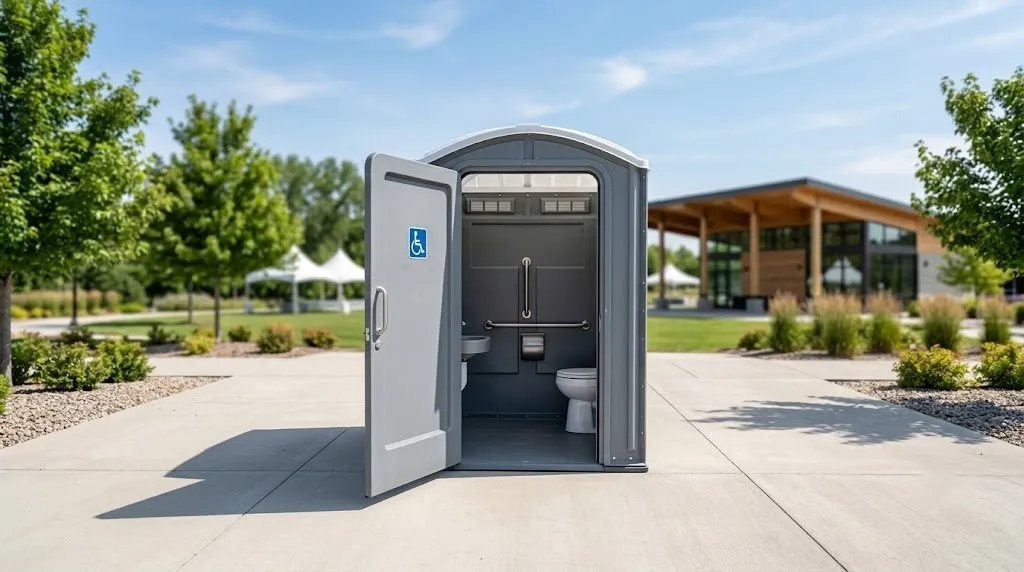
The short version: floor space, door width and a place to turn a wheelchair around. ADA Standards section 404.2.3 sets a minimum clear door opening of 32 inches, wider than what fits on a standard unit. Inside, ADA restroom requirements call for a 60 inch turning circle under section 304.3.1, so a wheelchair user can rotate without backing out the door. The approach path matters too. Section 403.5.1 requires a 36 inch clear route to the unit, which means the ground around it has to be stable and level, not gravel that shifts underfoot. Section 302.1 backs that up, requiring floor and ground surfaces that are firm and slip resistant. Grab bars, a raised toilet seat and a sink set at reachable height round out the build. Reach ranges follow section 308.2.1, with controls no higher than 48 inches, and door hardware has to meet section 309.4, operable with one hand and no more than 5 pounds of force. If you're comparing options, our ADA accessible porta potty line is the dedicated unit for this, not a standard toilet with a ramp bolted on.
How Many ADA Units Do I Need on a Job Site?
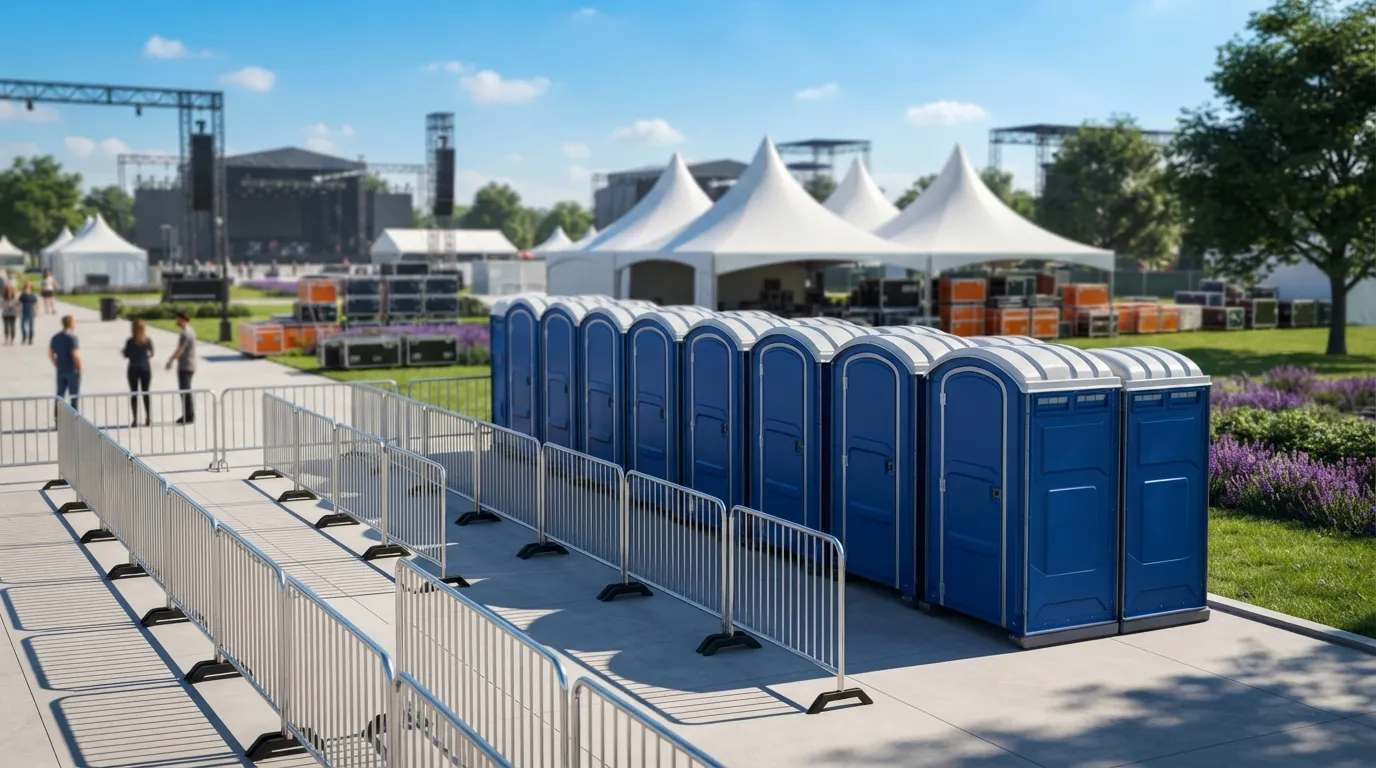
One ADA unit per cluster is usually the floor, not the ceiling. ADA Standards section 213.2 requires that where portable toilets are grouped, at least 5 percent of the cluster be accessible, and never fewer than one unit even if the math rounds to zero. So a bank of eight standard units near a Brockton work zone still needs one ADA unit sitting with them. This pairs with the general toilet count under OSHA 1926.51(c)(1): one facility for crews of 20 or fewer, then one toilet seat and one urinal per 40 workers as the crew grows past that, up to 200 workers. Use our how many porta potties do I need guide to size the full cluster first, then add the accessible unit on top. For general industry sites rather than construction, the ratio comes from 1910.141(c)(1)(i) instead. Either way, the accessible unit isn't optional once you have a cluster, and mixing it into a porta potty placement guide plan up front saves a second delivery trip later.
Where Should an ADA Unit Be Placed on Site?
Placement has to match the same accessible route as the rest of the site, not just be near the entrance. That means a stable, firm path per section 302.1, a minimum 36 inch clearance the whole way per 403.5.1, and a ramp if there's any grade, held to a 1:12 slope under section 405.2. In practice that rules out placing the unit past a curb cut with no ramp, or on turf that turns soft after rain, common around outdoor sites near Brockton. If you're planning delivery logistics, our porta potty placement guide covers clearance and surface prep, and the same crew handling your construction site services can walk the site with you before drop-off. For events, event restroom rental planning should flag ADA placement early since crowd flow around venues in Brockton often narrows the usable path more than organizers expect. A roll-off delivery, by comparison, needs about 60 feet of straight clearance behind the truck, so if an ADA unit and a dumpster are going in the same lot, plan both paths together.
Do You Need an ADA Restroom Trailer Instead?
For larger events or longer jobs, an ADA restroom trailer often makes more sense than a standalone unit. Trailers give you a private accessible stall with plumbed fixtures rather than a single portable box, and they scale better when the guest count or crew size climbs. Our 2 stall restroom trailer and 4 stall restroom trailer options both include ADA-configured stalls, and the restroom trailer rental page breaks down which size fits which headcount. Trailers need a level pad and, unlike a standalone unit, usually a nearby power connection, so check that before booking. For weddings and formal events, pairing an ADA stall with a luxury restroom trailer is common in Brockton and the towns nearby, since guests expect the same finish level across every stall. If you're not sure which route fits your event or budget, our restroom trailer rental cost page lays out the range, and request a quote if you want it sized for your specific guest count and site layout.
How much does a handicap porta potty rental cost near Brockton?
Weekly rates for an ADA unit run $120 to $240 depending on duration and delivery distance. A single weekend rental in Brockton typically lands near $240, based on measured pricing. Daily rates run higher per day than a full week, so multi-day jobs usually cost less per day if booked as a week. Check porta potty rental cost for the full breakdown.
Is an ADA porta potty required on every job site?
Not on every site, but it's required wherever you cluster multiple toilets, per ADA Standards 213.2, and general toilet counts still follow OSHA 1926.51(c)(1). A single-unit site with only a couple of workers may not trigger the same cluster rule. Check OSHA portable toilet requirements before finalizing crew-size counts.
What's the difference between a handicap porta potty and a standard unit?
The accessible unit has a wider door, interior turning space, grab bars and a raised seat, all sized to ADA Standards. A standard porta potty rental is smaller and cheaper but doesn't meet those clearances. Both use the same 60 to 70 gallon holding tank.
Can I place an ADA unit on gravel or grass?
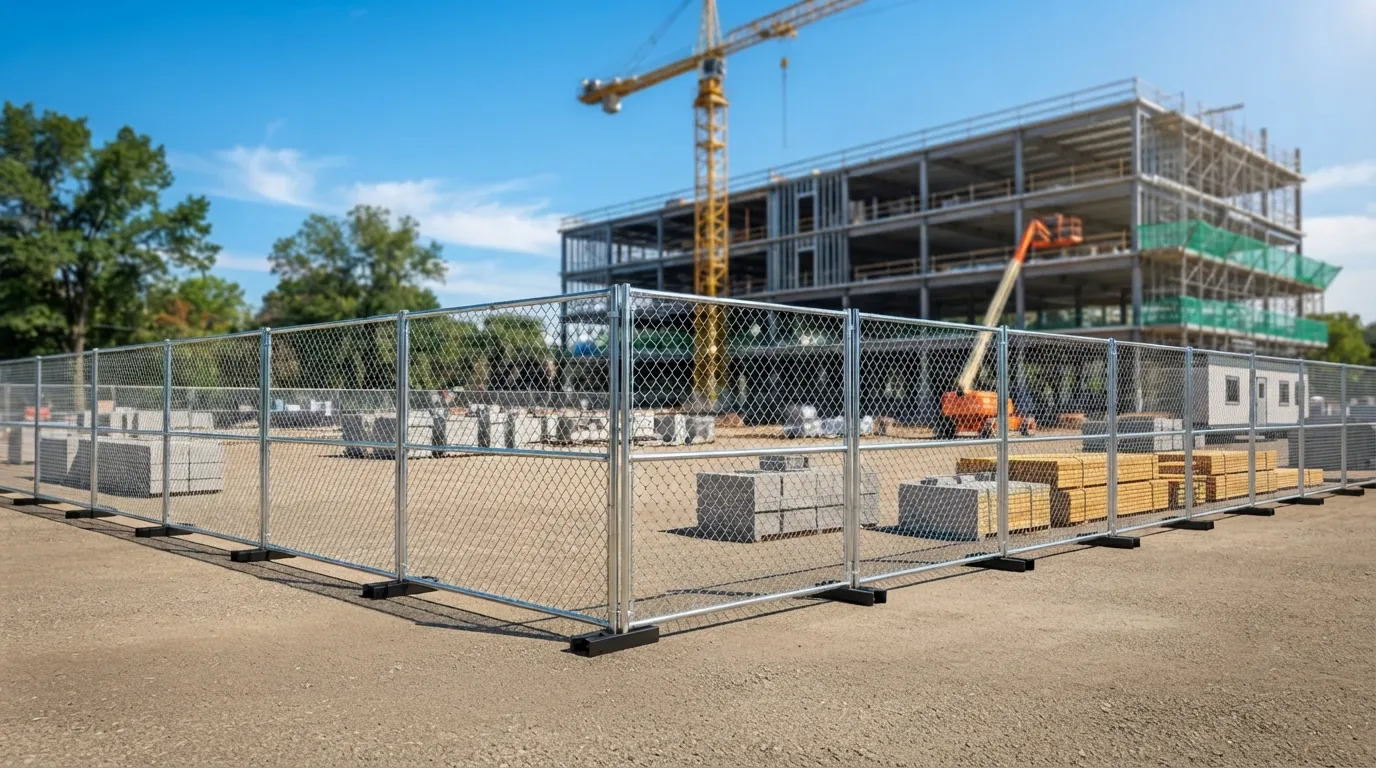
Only if the surface stays firm and stable under section 302.1. Loose gravel or soft turf can fail that standard after rain. We can assess your Brockton site and recommend a mat or pad if needed, similar to prep for a temporary fence rental install on uneven ground.
Do wedding and event venues need ADA restrooms too?
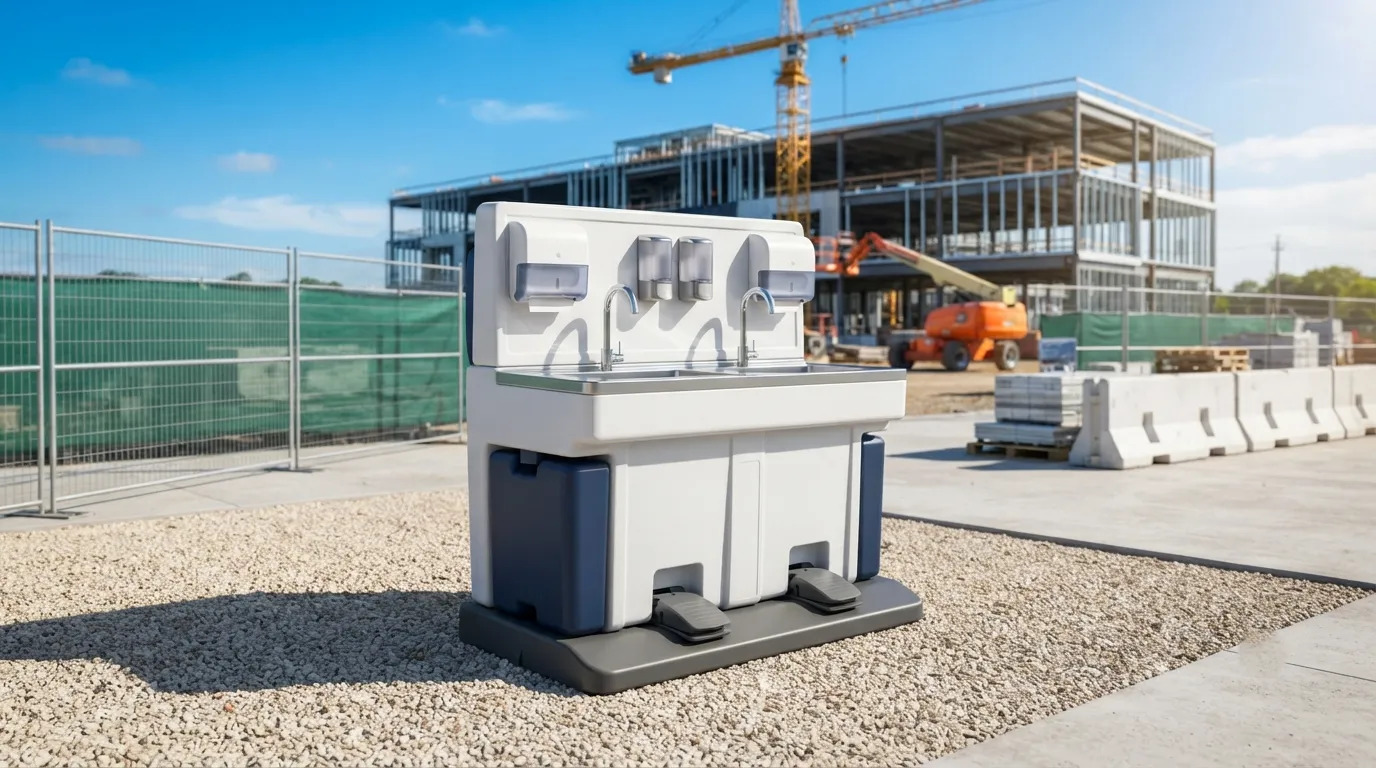
Most public and semi-public events benefit from at least one accessible unit, especially with mixed-age guests. Pair it with a wedding restroom rental or festival restroom rental package. Brockton event planners often bundle this with a handwashing station rental for the same footprint.
Next step
Get a delivery date
Tell us the address, the dates and the headcount. We size the order and confirm the route.